New construction
We lay out the loops, set the manifold and pressure-test the tubing before the pour.
- Loop layout and zoning
- Pressure test before the pour
- Boiler or heat pump sizing
Serving the Salt Lake Valley, Park City, Heber and Midway
Warm floors in every room, heated by hot water from a boiler or heat pump. We install new systems and fix the ones that went cold.
Hydronic radiant floor heating runs warm water through PEX tubing under the floor. A boiler or heat pump heats the water. Pumps and a manifold send it to each zone, and a thermostat in each room controls the heat. The floor warms the room from the ground up.
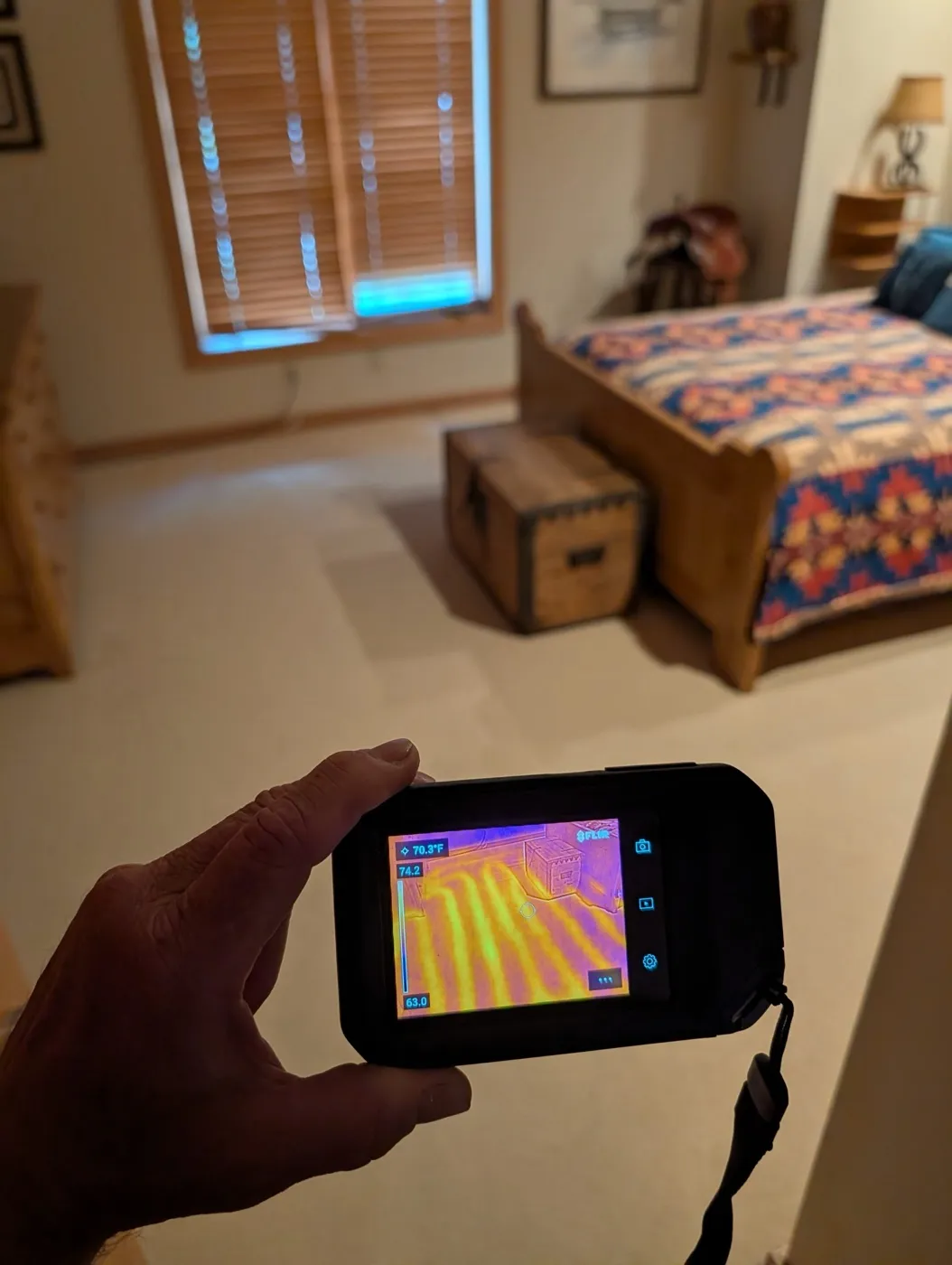
A cold floor usually means a problem you can't see. It might be a failed pump, a stuck zone valve, air in a loop or a bad mixing valve.
We use a thermal camera to see the heat in the floor. It shows which loops are warm and which are not, without pulling up tile.
Both warm the floor. They suit different jobs. We install and repair hydronic systems.
| Hydronic (hot water) | Electric mats | |
|---|---|---|
| Heat source | Boiler or heat pump | Electric cable or mat |
| Best for | Whole homes, basements and large areas | One bathroom or a small room |
| Running cost | Lower for large areas | Higher for large areas |
| Install cost | Higher up front | Lower up front |
| Works with snowmelt | Yes, from the same boiler | No, it's a separate system |
We lay out the loops, set the manifold and pressure-test the tubing before the pour.
Adding a room or redoing a bathroom? We can add a zone to your existing system.
Older systems collect sludge and air. A flush and fresh fluid bring back even heat.
Radiant floors are priced by the area, the floor type and the heat source. New hydronic systems typically run $8 to $18 per square foot for the tubing, manifold and controls. A new boiler or heat pump, if you need one, is extra.
We measure on site and give you a written quote.
| Factor | Why it matters |
|---|---|
| Area | More rooms mean more tubing, more zones and a bigger manifold. |
| Floor type | Tile and stone carry heat well. Hardwood needs lower water temperatures. |
| New build or retrofit | Tubing goes in easiest before the floor does. |
| Heat source | Your boiler may have room to spare. A new boiler adds to the cost. |
| Controls | A thermostat in every room costs more and gives you more control. |
From Pete's field log, from Salt Lake City to the Uintas.
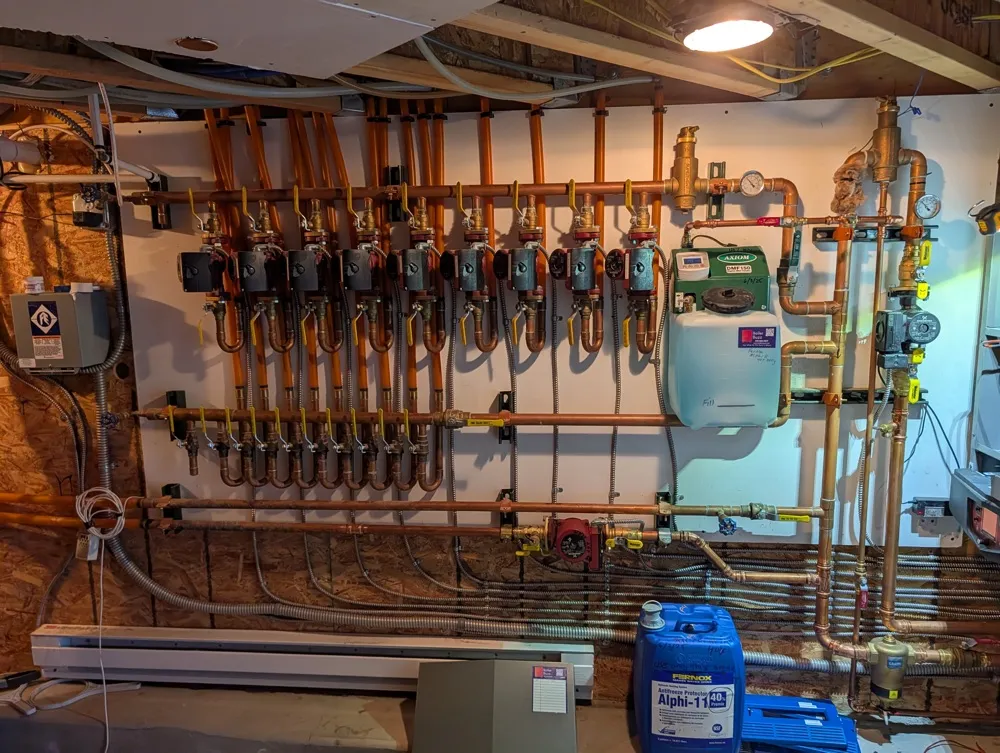
A cabin in the Uintas lost its radiant heat and hot water. We drove up and serviced the system.
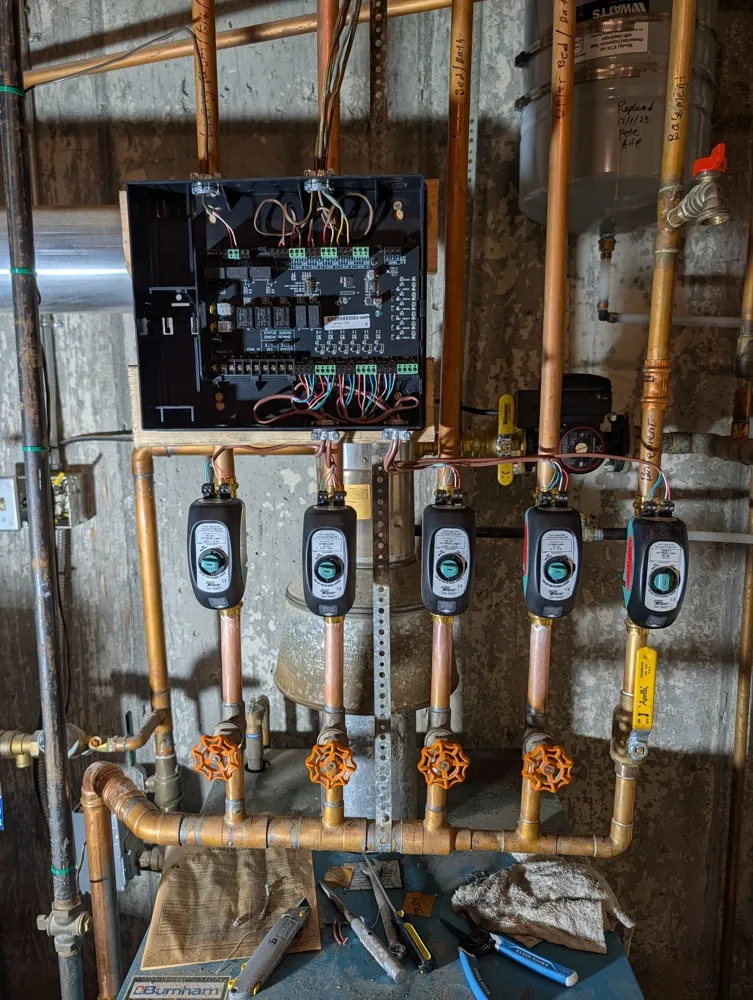
We installed a zone organizer, replaced the zone valves and flushed the system.
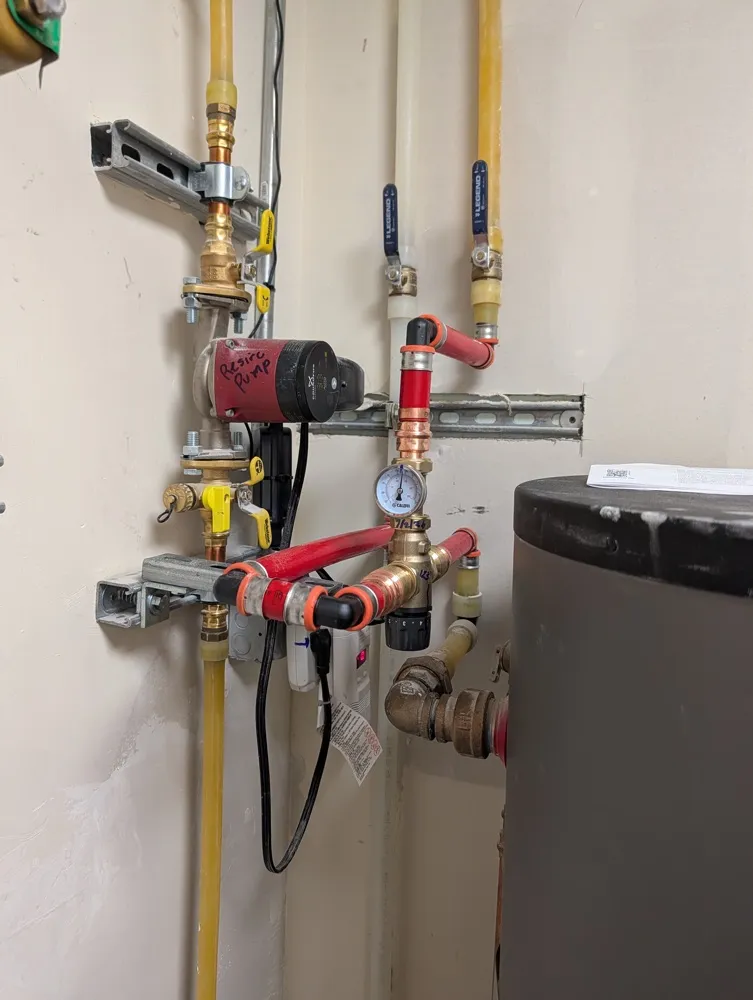
We serviced a radiant and snowmelt system, added a mixing valve and flushed it with fresh glycol.
“By far the most knowledgeable HVAC guy I know. And I build homes for a living and do remodel work.”
Yes, with the right design. Hardwood needs lower water temperatures and a mixing valve to protect the wood. We set the system up for your flooring.
Often, yes. In a remodel we can add tubing under a new floor. In a basement it can go in the slab or on top of it.
For many homes, yes. It heats evenly with no blowing air, and it pairs well with a high-efficiency boiler or an air-to-water heat pump.
Usually a zone valve, a thermostat or air in that loop. We test each one and fix the part that failed.
Yes. We work on most hydronic radiant systems, old and new.
We install and repair radiant floors in 25 towns across Salt Lake, Summit and Wasatch counties, all from our base in West Jordan.